
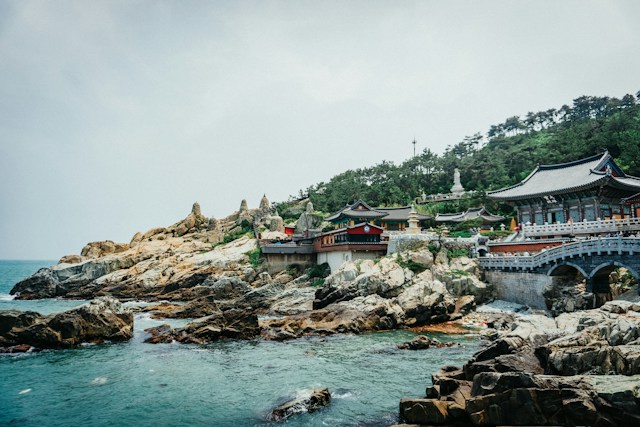
Where to Stay in Busan: The Best Areas
Heyyy, are you about to take a little trip to Busan? Love that for you. Although it’s one of Korea’s most touristy cities, it still keeps its local charm and is absolutely worth exploring. If you’re wondering where to stay in Busan, you’re in the right place. Busan has beaches, temples, fish markets and neighborhoods with a lot of personality.
What You Need to Know Before Traveling to South Korea
The first thing to keep in mind is that Busan is a pretty big city, so choosing where to stay in Busan saves you travel time and shapes the kind of trip you’ll have. Keep reading to find out about the best areas, who each one is best for and what types of accommodation you can find.
Quick Answer: What’s the Best Area to Stay in Busan?
- First time and want the beach: Haeundae.
- Views, cafés and nightlife: Gwangalli.
- Easy getting around and saving money: Seomyeon.
- Interested in markets and local life: Nampo and Jagalchi.
- Arriving by train and staying only a few days: the Busan Station area.
Haeundae: Beach, Hotels and Convenience
This is the most famous area and the most popular choice for first-time visitors to Busan. It has Korea’s best-known beach, a seaside promenade that comes alive at night, plenty of restaurants and a huge range of hotels, from hostels to luxury resorts.
Pros: beach atmosphere, lots of accommodation options, good subway access (Line 2) and close to attractions like the Sea Life Aquarium and Blueline Park. Cons: very crowded in summer (July and August) and higher prices in high season. Best for: first visits, families, couples and anyone who wants beach access and comfort.
Gwangalli: Bridge Views and Lively Nights
Its beach is calmer than Haeundae’s, and its biggest draw is the nighttime view of the illuminated Gwangan Bridge. The area is full of cafés, bars, seafood restaurants and a young, relaxed vibe.
Pros: spectacular views, great nightlife, a more local and less touristy atmosphere. Cons: fewer large hotels and some noise at night. Best for: couples, young travelers and café and sunset lovers. If the fireworks festival takes place in October or November, book well in advance, as the area fills up.
Seomyeon: The Practical, Budget-Friendly Hub
Seomyeon is Busan’s commercial heart and a major transport hub, where subway Lines 1 and 2 intersect. You’ll find shopping malls, restaurants, street food alleys and late-night entertainment, plus accommodation for every budget.
Pros: excellent connectivity, good prices and plenty of food options. Cons: it’s not by the sea, and the area is urban and busy. Best for: travelers who want to get around the whole city without overspending.
Nampo and Jagalchi: Traditional Busan
This is the most historic area, home to Jagalchi Fish Market, Gukje Market, BIFF Street and Busan Tower in Yongdusan Park. From here you can easily reach Gamcheon Culture Village and Yeongdo Island.
Pros: local atmosphere, street food, close to several attractions and budget-friendly stays. Cons: fewer upscale hotels and far from the main beaches. Best for: curious travelers, backpackers and food lovers.
Busan Station Area: Ideal for Arriving by Train
If you arrive by KTX from Seoul, staying near the station saves you transfers on your first and last days. It has good Line 1 connections, and Chinatown (Texture Street) is nearby.
Pros: convenient for arrivals and departures, good prices. Cons: less charm and atmosphere than other areas. Best for: short stays or one- to two-night stopovers.
Where to Stay in Busan: Area Comparison
| Area | Vibe | Best for | Approximate budget |
|---|---|---|---|
| Haeundae | Beachy and touristy | First-timers, families | Mid-high |
| Gwangalli | Young, views and cafés | Couples, nightlife | Mid |
| Seomyeon | Urban and commercial | Connectivity and savings | Low-mid |
| Nampo/Jagalchi | Traditional and local | Markets, culture | Low |
| Busan Station | Practical | Short stays | Low-mid |
Prices vary depending on the date and current offers, so it’s worth comparing before you book.
Types of Accommodation in Busan
- Hotels and resorts: plentiful in Haeundae and Marine City, with ocean views.
- Hostels and guesthouses: budget-friendly and social, especially in Seomyeon and Nampo.
- Apartments and aparthotels: a good option for longer stays or groups.
- Business hotels: simple, clean and well located, very common in Korea.
- Jjimjilbang: Korean spas open 24 hours where you can spend the night in the shared areas. It’s a cultural experience, though it doesn’t offer the privacy of a hotel.
Tips for Booking Your Stay in Busan
- Book ahead in July, August and during festivals and holidays like Chuseok.
- Check the distance to the subway: it’s the easiest way to get around Busan.
- Review the cancellation policy, especially during typhoon season.
- Think about your luggage: if you’re changing cities, a place near the station makes everything easier.
- Read recent reviews and confirm details like an elevator, air conditioning and underfloor heating (ondol).
Frequently Asked Questions
Haeundae or Gwangalli?
Haeundae is more touristy and has more to offer; Gwangalli is calmer, with better night views and a more local feel.
How many nights do you need in Busan?
Two or three nights cover the essentials. To explore at a relaxed pace, three or four is ideal.
Can you sleep in one area and visit the rest?
Yes. With the subway and buses, almost everything is less than an hour away.
How do you get from the airport?
From Gimhae Airport you can take the light rail and connect to the subway, or take a taxi. Check current options before you travel.
Final Thoughts on Where to Stay in Busan
There’s no single perfect area: it depends on your style. Haeundae is the safest choice for a first visit, Gwangalli adds charm, Seomyeon offers practicality and Nampo brings you closer to the most authentic Busan.
To round out your planning, check out the 2-week South Korea itinerary.
Last but not least, here’s my travel insurance recommendation so your trip goes smoothly: Go! Assistance!


También te puede interesar
Viajar sola a Seúl: todo lo que tenés que saber

Cómo moverse en Bali
