3-Day Seoul Itinerary: History, Food and Neighborhoods
My friendddd, so you’re looking for a good 3-day Seoul itinerary? Keep reading. This is a city that has it all. I’ll tell you, it made me fall so hard that the first time I visited, I ended up staying for a year. Literally, doing a volunteer program in Hongdae, but that’s another story.
Seoul is a city that blends palaces with centuries of history, skyscrapers, designer cafés and markets that smell like street food. With this 3-day Seoul itinerary you can see the essentials if you organize your route by area. It helps you combine tradition, pop culture and food without spending half your time on the subway.
3 Days in Seoul: Itinerary Summary
| Day | Theme | Highlights |
|---|---|---|
| 1 | Historic Seoul | Gyeongbokgung, Bukchon, Insadong, Cheonggyecheon |
| 2 | Tradition and modern city | Changdeokgung, Ikseon-dong, Gwangjang, DDP, Namsan |
| 3 | Trendy neighborhoods | Seongsu, Han River, Hongdae |
Before You Start: How to Get Around Seoul
Seoul has an efficient, clean subway with English signage. Get a T-money card for the subway and buses, and download Naver Map or KakaoMap, because Google Maps doesn’t work well for directions in Korea. To pick the best dates, check out our guide to the best time to visit South Korea.
Where to stay? Myeongdong and Jongno are practical thanks to their central location; Hongdae is ideal if you like nightlife, and Seongsu if you’re after a more modern vibe.
3-Day Seoul Itinerary
Day 1: Historic Seoul
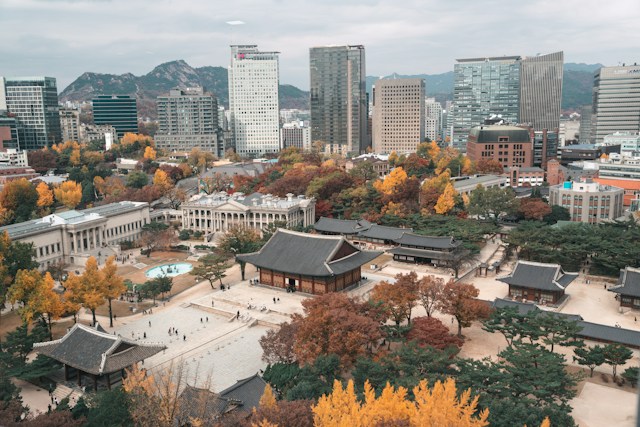
Morning: Gyeongbokgung Palace. It’s the city’s most iconic palace. If you rent a hanbok (traditional dress) from the shops nearby, admission is free. If you arrive at the right time, you can watch the changing of the guard ceremony. Check opening hours and closing days before you go.
Midday: Bukchon Hanok Village. A neighborhood of traditional houses on a hillside, with views over the city. It’s a residential area, so keep your voice down and respect the visiting hours and signs.
Afternoon: Insadong and Jogyesa Temple. On foot you can explore craft shops, tea houses and Jogyesa Temple, the main temple of Korean Seon Buddhism. Try hotteok (sweet pancake) from a street stall.
Evening: Cheonggyecheon and Myeongdong. Finish with a walk along the Cheonggyecheon Stream, lit up at night, and have dinner in Myeongdong, famous for its street food and Korean cosmetics stores.
Day 2: Tradition and the Modern City
Morning: Changdeokgung Palace. A UNESCO World Heritage Site, it’s considered one of the most beautiful palaces in Seoul. The Secret Garden (Huwon) can only be visited with a guide and usually requires advance booking, so check availability.
Midday: Ikseon-dong and Gwangjang Market. Ikseon-dong is a neighborhood of traditional houses turned into charming cafés and shops. Then have lunch at Gwangjang Market: try bindaetteok (mung bean pancake), mayak gimbap and tteokbokki.
Afternoon: Dongdaemun Design Plaza (DDP). An iconic building with curved lines designed by Zaha Hadid. It has exhibitions, shops and a park with lights at night. The Dongdaemun markets are perfect if you love fashion.
Evening: Namsan and N Seoul Tower. Go up at sunset by cable car or on foot to see the city lit up. It’s one of the best views in Seoul, though it tends to get crowded on weekends.
Day 3: Trendy Neighborhoods and the Han River
Morning: Seongsu-dong and Seoul Forest. Known as “the Brooklyn of Seoul,” this neighborhood of converted factories has specialty cafés, design stores and pop-up shops. If you want some greenery, Seoul Forest is nearby.
Afternoon: Han River. Enjoy a picnic at Hangang Park, a local tradition. You can order food delivery to the park or buy a ramyeon at a convenience store and cook it in the machines available there. If you’re traveling in summer, the Banpo Bridge fountain usually puts on a nighttime show (check the season and schedule).
Evening: Hongdae. It’s the university district, with street music, fashion shops, karaoke (noraebang) and lots of nightlife. It’s ideal for your last night.
Want to change something? If you’d rather see other places, swap the morning for a day trip to Suwon or a DMZ tour (the latter requires advance booking).
What to Eat in Seoul
- Samgyeopsal: grilled pork belly, eaten with lettuce wraps and sauces.
- Tteokbokki: rice cakes in spicy sauce, a street food classic.
- Bibimbap: rice with vegetables, egg and gochujang sauce.
- Naengmyeon: cold noodles, perfect in summer.
- Chimaek: the combo of fried chicken (chicken) and beer (maekju).
- Gimbap: rice and seaweed rolls to eat on the go.
- Dak galbi: spicy stir-fried chicken with vegetables.
Rainy Day Plan B
- Starfield Library in the COEX Mall, a spectacular library to wander through.
- The National Museum of Korea, free admission according to the latest information, though it’s worth double-checking.
- Jjimjilbang (Korean spa) to relax and enjoy a cultural experience.
- Lotte World Mall or Lotte World Tower for views over the city from above, if the weather clears up.
Practical Tips for Seoul
- Start early to visit palaces and traditional neighborhoods with fewer crowds.
- Wear comfortable shoes: you’ll walk a lot and there are hills.
- Bring cash, as some street stalls don’t accept cards.
- Don’t tip: it’s not customary in Korea.
- Check opening hours and closures for palaces and museums, which usually close one fixed day a week.
- Read my guide on what you need to know before traveling to South Korea to avoid surprises.
Frequently Asked Questions
Is three days enough in Seoul?
It’s enough for the essentials. With four or five days you can add day trips like Suwon or the DMZ.
Is it worth buying a tourist pass?
It depends on your route. Compare prices, because transportation and many attractions are affordable.
Can you do this itinerary in winter?
Yes, but bring thermal layers. Indoor activities and markets help you cope with the cold.
Final Thoughts on This 3-Day Seoul Itinerary
In three days, Seoul shows you its historic side, its modern energy and its unforgettable food. If you have more time, combine this route with my 3-day Busan itinerary or my 2-week South Korea itinerary.
Oh, and I recommend the travel insurance I use: Go! Assistance!

También te puede interesar

Viajar barato a Corea del Sur
Da Nang o Nha Trang: cuál elegir